
Blogpost
OCT 2026
One year at Hugging Face 🤗
LinkedIn
A year ago I joined the WebAI team at Hugging Face to work on Transformers.js with Joshua Lochner. It's been the most intense and rewarding year of my career so far. Here's what we built:
WebML at Hugging Face, Google Developer Expert, and a few years of conference stages behind me. The long version, plus what came before.
Who I amAI agents in the browser, K.I.T.T. in JavaScript, robots over Bluetooth, ... Every one with on-device live demos along the way.
See the talksSide projects, articles, videos, pictures and podcast appearances. Whatever I am currently building and exploring.
Have a lookOver the past few years, I’ve spoken at conferences and meetups across Europe, meeting brilliant people and happily nerding out about what browsers can do.
A year ago I joined the WebAI team at Hugging Face to work on Transformers.js with Joshua Lochner. It's been the most intense and rewarding year of my career so far. Here's what we built:
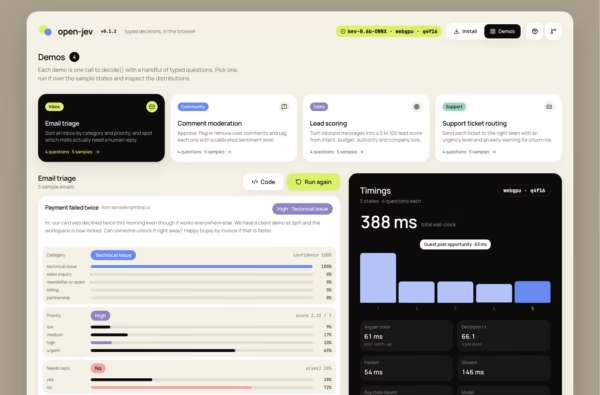
open-jev is a browser-focused TypeScript library for typed decisions: one piece of text (the state) plus any number of typed questions go in, and one forward pass returns a calibrated probability distribution per question. Nothing is generated, so an answer is always one of the options you provided.